
After 44 years, Israel recaptures Beaufort Castle – Why the Crusader fortress is a strategic stronghold in southern Lebanon J. Micah Hancock |
Published: May 31, 2026 All Israel News
Following the IDF's announcement of the capture of Beaufort Castle this morning, Prime Minister Benjamin Netanyahu called it “a dramatic change” in Israel’s policy regarding Lebanon.
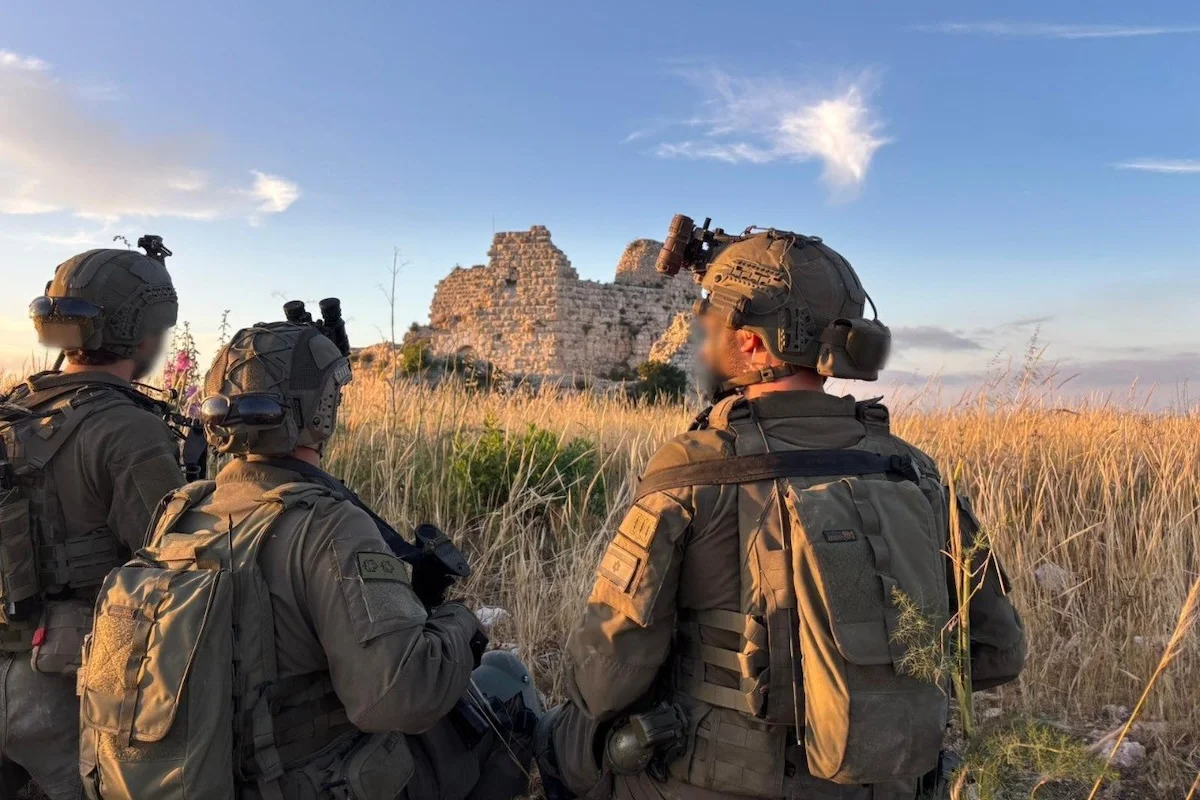
“Last night, our heroic fighters captured the Beaufort castle. They proudly raised the flag of the State of Israel and the flag of the Golani Brigade there,” Netanyahu told the Israeli public.
“I remind you that 44 years ago, this place was a symbol of a heroic battle by our fighters, but it was also a symbol of deep division among us,” Netanyahu continued, referring to the IDF's capture of the fort during Israel’s 1982 incursion into southern Lebanon, which was launched to combat Palestinian militant groups operating from the area.
“Today, we returned to Beaufort differently,” Netanyahu said. “We returned united, determined, and stronger than ever.”
The prime minister said that since the start of the Oct. 7 war, Israel has “eliminated 8,000 Hezbollah terrorists.” He said that 3,000 of those Hezbollah operatives were killed during Operation Roaring Lion, with 700 eliminated in the past month alone.
“This is more than everyone we eliminated during the Second Lebanon War,” he stated, referring to Israel’s conflict against Hezbollah in 2006.
“Our forces have crossed the Litani River. They took dominant terrain. They captured the Beaufort ridge,” the prime minister stated. “And now my instruction is to deepen and expand our hold on places that were under Hezbollah's control.”
“The capture of Beaufort is a dramatic stage and a dramatic change in the policy we are leading,” he continued. “We have broken the barrier of fear. We are taking the initiative, we are operating on all fronts – in Syria, in Gaza, in Lebanon; we have established security zones beyond our borders to protect our communities.”
Netanyahu also promised to bring security to the northern communities, saying, "It will take time, but we will complete the mission.”
Defense Minister Israel Katz also mentioned the history of Beaufort Castle, noting the IDF Golani Brigade’s work in capturing it 44 years later.
“I salute the Golani fighters and all IDF fighters who wrote another chapter of Israeli heroism in the place where our heroes fell for the homeland,” Katz wrote on his social media account.
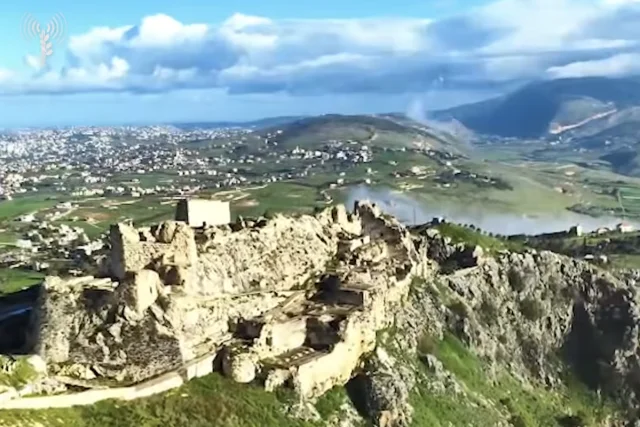
The recapture of the historical site raises the question: What makes Beaufort Castle so strategically important?
The IDF first seized the fortress on June 6, 1982, after Palestinian militants had occupied it. In the early 1980s, thePalestine Liberation Organization (PLO) took control of the castle and used it to launch attacks into Israeli territory as part of its insurgency campaign. When Israel launched Operation Peace for Galilee, marking the start of the First Lebanon War, the IDF conducted a large-scale assault to seize the fortress and the surrounding high ground as part of its opening maneuvers.
While ultimately successful, the attack led to the death of six IDF soldiers, including officers, who were among the Golani forces assigned to capture the fort.
The fortress, a Crusader castle, features natural defenses and is situated atop the rocky Beaufort Ridge, making it an ideal defensive position.
Sitting at more than 700 meters (2,300 feet) above sea level, control of Beaufort provides Israeli forces a critical observation point over most of southern Lebanon and northern Israel. The castle is located about two kilometers from the town of Arnon in southern Lebanon, and directly overlooks the Israeli community of Metula, less than 4 kilometers (2.5 miles) away.
From the walls of the fort, soldiers can see into the Hula Valley and the Galilee plains, in Israel, as well as much of the Litani River and the Nabatieh–Marjayoun corridor in Lebanon, making it an ideal location for surveillance and reconnaissance.
This geographical position has given the castle strategic importance for centuries, making it the focus of repeated battles and military fortifications.
In addition, the fortress, just a few kilometers from the city of Nabatieh – which the IDF describes as a Hezbollah stronghold in southern Lebanon – holds symbolic significance because it was previously captured and occupied by Israeli forces for many years.
After securing the removal of most of the Palestinian militant groups from Beirut, Israel withdrew to the South Lebanon Security Zone, which it maintained until 2000.
Israel ultimately withdrew from Beaufort Castle and the nearby fortifications it had built as part of its withdrawal from southern Lebanon in 2000. This withdrawal was seen as a victory by Hezbollah and is cited as a reason for the group's confidence and standing, encouraging further attacks on northern Israeli communities that eventually led to the 2006 Second Lebanon War.

J. Micah Hancock is a current Master’s student at the Hebrew University, pursuing a degree in Jewish History. Previously, he studied Biblical studies and journalism in his B.A. in the United States. He joined All Israel News as a reporter in 2022, and currently lives near Jerusalem with his wife and children.
No comments:
Post a Comment
Thanks for sharing. Blessings on your head from the Lord Jesus, Yeshua HaMashiach.
Steve Martin
Founder
Love For His People
Charlotte, NC USA