Showing posts with label Susan Michael. Show all posts

Tuesday, May 19, 2026

The historical origins of Christian Zionism - Susan Michael, All Israel News


The historical origins of Christian Zionism


Christian Zionism has become a frequent topic in recent news, especially as media figures like Tucker Carlson and Nick Fuentes criticize those who affirm Israel’s God-given right to the land—a promise made to the descendants of Abraham, Isaac, and Jacob in Genesis 12:1–3, 7.

However, Christian Zionism is not a modern invention. While the term is relatively new, its roots stretch back centuries—in fact, as far back as the early church.

Just as Jesus and the disciples were Jewish, so were almost all the New Testament authors, as was the early church they wrote about. As a result of their deep understanding of the Hebrew Scriptures, these authors believed in the everlasting validity of the Abrahamic covenant. They also believed in the literal accuracy of the prophecies regarding the life and ministry of Jesus as well as those about future events, including the restoration of a kingdom to Israel.

In the first century, church fathers still held to the theological expectation of a restored nation of Israel. Dr. Tricia Miller, director of CAMERA’s Partnership of Christians and Jews, writes:

The expectation of a future return of the Jewish people to the land and the restoration of the nation of Israel was also fairly common in the early church. Tertullian, a third-century leader, said: “It will be fitting for the Christian to rejoice, and not to grieve, at the restoration of Israel, if it be true, as it is, that the whole of our hope is intimately united with the remaining expectation of Israel.”[1]

As the church grew over time, it became predominantly Gentile. Christians—from pagan backgrounds with little knowledge of the Hebrew Scriptures—lost sight of the Jewish roots of their faith and God’s promises to the Jewish people. Most did not even know that Jesus was Jewish.

The Council of Nicaea

The Council of Nicaea of AD 325 was a turning point in that separation. This Council was monumental in affirming the divine nature of Jesus, articulated most clearly in what became known as the Nicene Creed. In his article “Healing the Rift: 1700 Years After the Nicaea Council,” ICEJ President Dr. Juergen Buehler states: “While the creed and the 20 canons that emerged from Nicaea were free of anti-Jewish rhetoric, the official letters [to distribute the creed to churches throughout the world] from Emperor Constantine contained a critical and condescending attitude toward the Jews.”[2] This tone spread throughout the church, resulting in anti-Jewish preaching by some of the most notable church fathers.

Nicaea to the Reformation

For well over 1,000 years, most of the church believed that Christians had replaced the Jews as the people of God’s covenant. Known as Replacement Theology, this interpretive framework reads the Scriptures allegorically. God’s promises to the Jewish people are spiritualized and applied to the church. In rare instances, monks and priests read the Scriptures differently; however, in the church’s first thousand years, this view remained predominant and became the fuel that fed centuries of Christian antisemitism.

The Reformation

This began to change in the fifteenth and sixteenth centuries when the Bible was translated into the languages of the common people, including into English. Christians began reading Scripture for themselves. They learned about Christianity’s Jewish roots and the promised return of the Jews to their ancient homeland.

As a result, respected theologians and preachers taught of a future Jewish restoration to the land of Israel. Entire movements of Christians began praying for this return. By the eighteenth century, the Restorationist movement had blossomed and included many theologians, writers, and politicians. This movement continued to grow in the nineteenth century; the term “Christian Zionist” was first used by Theodore Herzl, who acknowledged the participation of some key Christian supporters at the first Zionist Congress in 1897. Christian leaders had expanded their involvement in the Zionist cause beyond prayer to advocacy. They did all that they could to help the Jewish people return to Israel.

Christian Zionists today are proud to follow in the footsteps of a multitude of Bible-believers from numerous theological persuasions, countries, and professions—men and women who saw overwhelming evidence in Scripture for God’s continuing covenant with the Jewish people and their right to their ancient homeland. While many Christian Zionists today may differ with these pioneers on other points of theology or politics, they all agree on the biblical significance of the restoration of Israel.

Conclusion

From the early church fathers through the Reformation and beyond, a faithful remnant of believers has stood firm in their conviction that God’s covenant with the Jewish people—His promise to be an everlasting people and a blessing to the world in a specific land—remains unbroken. And though Replacement Theology caused a centuries-long schism between the church and synagogue, the modern shift away from it has enabled the church to rediscover its Jewish roots and recognize Israel’s restoration—both physical (to the land) and a future spiritual restoration.

Clearly, Christian support for the Jewish people did not originate in 1948 with the birth of the State of Israel. Instead, deep-rooted biblical conviction is the driving force behind the Zionist vision. 

[1] Tricia Miller, PhD, CAMERA, “No Tucker, Christian Zionism is NOT Christian Heresy! Israel 365 News, November 5, 2025.
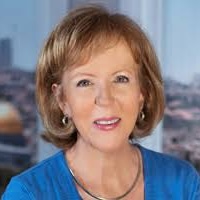
Dr. Susan Michael is the U.S.A. Director of the International Christian Embassy Jerusalem, Director of the American Christian Leaders for Israel network and creator of the Israel Answers website. She is the author of Encounter the 3D Bible and hundreds of articles located on her blog.

Wednesday, March 8, 2017

Proof That Zechariah 12:3 Is Literally Unfolding Before Our Eyes - SUSAN MICHAEL CHARISMA NEWS

Jerusalem (Pixabay)

Proof that Zechariah 12:3 Is Literally Unfolding Before Our Eyes
SUSAN MICHAEL  CHARISMA NEWS
Standing With Israel
For the Christian reader, it's a name that invokes the Psalms describing its beauty, its spiritual significance, and the importance of praying for its peace. For others it stirs a wide spectrum of emotions and a quagmire of international disagreement. Here are several reasons for the multilayered controversy over Jerusalem.
The United Nations, War of Independence, and Six-Day War
Over the last 150 years, as Jerusalem expanded beyond the ancient walls of the Old City, Jews and Arabs lived interspersed on both the eastern and western sides. A complicating factor was introduced in 1947 when the United Nations drew up the Partition Plan, offering swaths of land for both Jewish and Arab states, and keeping Jerusalem separate as an internationally managed city. The Jews begrudgingly accepted the plan and declared statehood, while the Arabs rejected it outright and, instead of statehood, declared war on the new-found Jewish State.
At the end of the 1948 War of Independence between Israel and the armies of Egypt, Jordan, Lebanon, Syria and Iraq, armistice lines were drawn on a map with a green pen—still known today as the Green Line. Jerusalem became a divided city: Israel controlled the western part and Jordan controlled the eastern part. For the next 19 years, Jordanians prevented Jews from accessing Jerusalem's Old City and Western Wall of the Temple Mount, Judaism's holiest site.
In 1967 the Six-Day War broke out with the surrounding countries. Israel won the war, capturing the rest of Jerusalem and, for the first time since 1949, allowing the Jewish people to worship at the Western Wall. Israelis offered Arabs full citizenship and many accepted, while others accepted Permanent Resident status. For 50 years now, an undivided Jerusalem has thrived under Israel's governance, and all three faiths have enjoyed full access to their holy sites.
Israel Declares Jerusalem as Its Eternal, Undivided Capital in 1980
The Jerusalem controversy intensified in 1980 when Israel's Knesset declared all of Jerusalem as their eternal, undivided capital. An outcry sounded across the world. The United Nations refused to recognize Israel's decision and urged embassies in Jerusalem to relocate, wherewith they vacated the city for Tel Aviv. In response a small group of resolute Christians founded the International Christian Embassy Jerusalem (ICEJ). Since 1980 the ICEJ has mobilized Christian support for the State of Israel and the Jewish people worldwide. In the ensuing years, Israel's government has recognized the ICEJ's important outreach to all the country's communities, including Jews, Arabs, Muslims, Christians, Druze and Ethiopians.
Yasser Arafat Demands East Jerusalem Be the Palestinian Capital
Jerusalem was forced into a more dangerous quagmire under the tutelage of Palestinian Authority leader, Yasser Arafat. In 1993, after the Oslo Peace Accords, Arafat moved to Israel and set out on a disinformation crusade. He renamed the local Arabs as "Palestinians," incited Intifadas, and proclaimed the goal of Palestinian statehood with Jerusalem as the capital, even though "Palestine" had never before been a nation.
Arafat's repeated declaration of Jerusalem as the Palestinian capital sent shock waves into Israel and beyond. In recent decades, the United Nations has positioned itself squarely on the Palestinians' side and has become a veritable playground of anti-Israel resolutions, while the Palestinians themselves refuse direct negotiations with Israel.
US Congress Stands in Support of a United Jerusalem
Many streams flood into this river of controversy, but the United States Congress has been a consistent champion for Israel—both Democrats and Republicans. In 1995, Congress passed the Jerusalem Embassy Act which recognized Jerusalem as the capital of Israel and legislated that the US Embassy should move there from Tel Aviv. A caveat in the legislation allowed the last three presidents to delay that move. However, moving the US Embassy is now a hot topic as President Trump has declared his intention to relocate the US Embassy to Jerusalem.
3 Monotheistic Faiths Are Stakeholders
For the worldwide Jewish community, Jerusalem is at the heart of their faith and was established by King David as the capital of the Jewish people some 3,000 years ago. Jerusalem was also the focal point during 2,000 years of Jewish Diaspora as they longed for their ancient homeland. For Christians, Jerusalem is particularly significant: it is the ancient Jewish city where Jesus walked, taught, lived, died, and rose again some 2,000 years ago. The Muslim world reveres Jerusalem and believes their prophet ascended from there on his Night Journey.
The problem is not in the close proximity of holy sites belonging to three different religions but when one of those religions shows disrespect for the others.  The Muslim Jordanian armies destroyed all of the synagogues in the Old City of Jerusalem and refused access to Jews who wanted to pray at the Western Wall.  The Jewish Israeli government has shown respect to all three faiths and allowed freedom of access to all sites.  The only religion not having free access to all of their holy sites is the Jewish faith, whose believers can not pray on top of the Muslim-controlled Temple Mount.
It is time for international powers to recognize the peace and religious freedom that Israeli governance has maintained and stop attempts to delegitimize their rule over the city. As a Christian organization, the ICEJ applauds the Israeli government for our freedom of worship and access to holy sites.
For students of the Scriptures it is not surprising that the mention of the name Jerusalem draws such a lightning rod of controversy; it is predicted. Zechariah 12 even contains dire warnings of the consequences of this type of international opposition to Jerusalem and pursuit to take control of the city—a warning the nations should certainly heed:
"And it will be on that day that I will set Jerusalem as a weighty stone to all the peoples. All who carry it will surely gash themselves, and all the nations of the land will be gathered against it" (Zech. 12:3, MEV). 
Susan Michael is the U.S. director of the International Christian Embassy Jerusalemicejusa.org, creator of the israelanswers.com educational website on Israel and Christian Zionism.
Leaders are readers! Subscribe now and get 3 magazines for the price of 1. Get Ministry Today, Charisma and SpiritLed Woman all for $24. YES - Sign me up!
3 Reasons Why you should read Life in the Spirit. 1) Get to know the Holy Spirit. 2) Learn to enter God's presence 3) Hear God's voice clearly! Click Here to draw closer to God!
Did you enjoy this blog? Click here to receive it by email.

Tuesday, January 31, 2017

Pro-Israel Christians Line Up to Support Trump Moving Jerusalem Embassy - JNS BREAKING ISRAEL NEWS


Pro-Israel Christians Line Up to Support Trump Moving Jerusalem Embassy


“Thus saith Hashem: I return unto Tzion and will dwell in the midst of Yerushalayim; and Yerushalayim shall be called the city of truth; and the mountain of Hashem of hosts the holy mountain.” Zechariah 8:3 (The Israel Bible™)
By: Sean Savage
Aside from its centrality to Jewish peoplehood as the home of the ancient Jewish Temples and now the modern state of Israel’s capital, Jerusalem is also synonymous with Judaism for many Bible-reading Christians. As such, prominent pro-Israel Christian organizations are lining up to express their support for President Donald Trump’s promise to move the U.S. Embassy in Israel from Tel Aviv to Jerusalem, and to hold the president accountable for his words.
Susan Michael, U.S. director for the International Christian Embassy Jerusalem (ICEJ), said Christians already understand that Jerusalem is the capital of Israel and would like to see the American government follow suit. In fact, ICEJ has had its own “unofficial” embassy in Jerusalem since 1980, a point that Israeli Prime Minister Benjamin Netanyahu noted in his 2016 Christmas address.
READ MORE

Thursday, January 19, 2017

Why We Need Another Damascus Road Revelation - SUSAN MICHAEL/ICEJ CHARISMA NEWS

Much like those who prayed for Saul on his way to Damascus, we need to pray for Christians and Jews in the Middle East. (Flickr )

Why We Need Another Damascus Road Revelation

SUSAN MICHAEL/ICEJ  CHARISMA NEWS
Standing With Israel
A popular mountain peak frequented by tourists in Israel is Mount Bental in the Golan Heights. From the top of this mountain, one can see into Lebanon to the northwest and into Syria to the east, bringing home just how small Israel is and how close are her enemies: Hezbollah in South Lebanon, ISIS and other jihadist groups in Syria, not to mention the Syrian Assad regime.
Looking down into Syria, one can see a modern highway built in the general vicinity of one of the ancient roads leading into Damascus. The conversion of Saul in Acts 9 took place on just such a road, so this is a great place to review that story and act upon its lesson.
Saul was an enemy of the believers in Jesus and had the authority of the high priest in Jerusalem to capture and bring them bound to Jerusalem.
The believers in Damascus were terrified and must have prayed much for Saul, because the next part of the story is nothing short of a miracle. Jesus appears to Saul before he even reaches the city and causes him to lose his sight. Ananias is then told to find Saul, lay hands on him, and pray for him to receive the Holy Spirit. Saul spends the rest of his life as: "Paul, a servant of Jesus Christ, called to be an apostle and set apart for the gospel of God" (Rom. 1:1).
Praying for Our Enemy
The lesson from this story is to pray for everyone—even one's enemies, who are bent on doing harm. Today, there is a great spiritual battle brewing over the region, and the same forces that want to destroy Israel and Christian communities are killing each other in the quest for control. Mount Bental is the perfect place from which to intercede for all the people caught up in this turmoil.
The Middle East, the birthplace of Christianity, was predominantly Christian before the Islamic forces invaded in the seventh century. A thousand years ago, there were more Christians in the Middle East than in Europe. Even a century ago, more than 20 percent of the region's population was Christian.
Today, estimates put the Christian population in the region at less than 5 percent and likely to become extinct. The second-largest Christian community in the Middle East, after the Copts of Egypt, is the Syriac/Assyrian Christians from Iraq, Syria and surrounding areas. They are now displaced; many are refugees and will never regain their community's size and strength.
Hearts should break over the human toll and suffering this conflict has and could still potentially cause. All the peoples of the Middle East—Jew, Christian and Muslim—are, in one way or another, victims of the spiritual stronghold over the region that causes hatred, violence and death.
There needs to be much prayer for the protection of Israel and the Christians, but also for the gospel to go forth throughout the region in even greater ways than it already is. Indications are that the region is more open to the gospel than ever before. Throughout the Muslim world, Jesus is appearing to people in dreams and visions, and they are turning to Him. What began as a small trickle in the early 1980s has mushroomed to now millions of Muslims who have turned to Christ.
God Chose Israel for Blessing
God loves all the peoples of the Middle East, as they are part of the world He loved and sent His Son to die for (John 3:16). This is just as true for the Arabs or Muslims, as it is for anyone else. God's choice of Israel was not to bless the Jewish people to the exclusion of others, but that through them He would bless all the families of the earth (see Gen. 12:3). In fact, it is because of God's love for the world that He brought into existence the nation of Israel through whom He would bring about His redemptive plan.
Millions of people are caught in the crossfire of the forces of evil that hate God, His plan and His people. Let's pray for them. A Damascus Road revelation of the Prince of Peace is their only hope. 
Susan M. Michael is US Director of the International Christian Embassy Jerusalem www.icejusa.org and her articles can be found at icejusa.org/susans-blog
For information on the ICEJ's tours to Israel go to www.icejusa.org/tours
Leaders are readers! Subscribe now and get 3 magazines for the price of 1. Get Ministry Today, Charisma and SpiritLed Woman all for $24. YES - Sign me up!
3 Reasons Why you should read Life in the Spirit. 1) Get to know the Holy Spirit. 2) Learn to enter God's presence 3) Hear God's voice clearly! Click Here to draw closer to God!
Did you enjoy this blog? Click here to receive it by email.

Wednesday, December 21, 2016

A Wake-up Call: A New Chapter in the Hanukkah Story - SUSAN MICHAEL/ICEJ CHARISMA NEWS

Jewish Christmas

Once these ideologies take hold, the masses can then be easily controlled, because they will have no loyalty to a religious creed, national identity or moral code. (Flickr )


A Wake-up Call: A New Chapter in the Hanukkah Story


The story of Hanukkah is often told with an emphasis on the evil ruler, Antiochus IV Epiphanes, King of the Hellenistic Seleucid empire, who was bent on the Hellenization of the Jewish people.
Had he succeeded, it would have meant the demise of the Jewish faith and thereby, the Jewish people. God's plan to bring salvation to the world through their Messiah would have died with them.
In his attempt to force the Jews into compliance, Antiochus IV slaughtered 40,000 inhabitants of Jerusalem; murdered the high priest and prohibited sacrifices, the service of the temple and the observance of the Sabbath and feast days. The temple was dedicated to Zeus and then desecrated with the slaughter of a pig on the sacrificial altar.
The Maccabean family, from the priestly line of Aaron, led a revolt and miraculously experienced victory after victory over the mighty Greek forces until, at last, the temple could be purified and its services restored. Hanukkah is known as the Feast of Dedication because it commemorates the cleansing and rededication of the temple to the God of Israel. Its symbol is the temple menorah, which allegedly burned miraculously for eight days on just a small amount of oil.
Ancient Means of Control
This story, however, is about more than an evil ruler. He was imposing the ruling culture and ideologies of the empire upon the Jews, including paganism and an immoral pagan society as well as the Greek language; culture and ruling philosophies of reason, humanism and pursuit of knowledge. This is how kings subdued and controlled the people in their kingdoms.
In the ancient world, Jews often clashed with pagan rulers such as Antiochus Epiphanes, who demanded obedience to them and homage to their gods as a means of proving one's loyalty. The Jewish people could not bow down to these pagan leaders nor their gods and were bound by the Mosaic Law to certain behaviors and observances that set them apart from other societies and brought upon them great persecution, exiles and threats of extinction.
Modern Imposition of Ideologies
A new chapter in the Hanukkah story is being written today—godless world leaders are attempting to impose on all of us the ideologies of secularism, globalism, and moral relativism. Once these ideologies take hold, the masses can then be easily controlled, because they will have no loyalty to a religious creed, national identity, or moral code.
Israel, a Jewish nation-state, is antithetical to all three of these modern ideologies. Therefore, its Jewish national identity is accused of being racist by secular globalists. The very nation that gave to the world the Ten Commandments, on which Western civilization bases its legal code and definition of morality, is hated by those attempting to impose their ideology of moral relativism: the belief that there is no objective right or wrong, truth or falsehood, good or evil.
The seemingly contradictory part of this secular movement is that its proponents are not just tolerating but are assisting in the global dominance of Islam—a religion with a very strict legal and moral code that it seeks to impose on the world, especially upon the secularist "infidels." There is only one explanation for this strange alliance, and that is deep down, both movements share something in common: they are both anti-Christian and anti-Semitic at heart.
UNESCO Imposing Islamic Ideology
In this context, the recent attempt by the United Nations Educational, Science and Cultural Committee (UNESCO) to deny the historical and biblical connection of the Jewish people to Jerusalem and, indeed, all the land of Israel begins to make sense. The Arab voting block and their secular, globalist cohorts in the UN ignore what is a written and historical record of ownership by the Jews.
Islam teaches that the Jewish and Christian Bibles are corrupted. Therefore, Muslims completely disregard biblical accounts, proving Jewish ties to the land of Israel, including the city of Jerusalem, and most importantly, the temple mount.
This is in spite of the fact, the biblical record has been backed by one archaeological find after another proving not only the existence of the Jewish temple on the temple mount, but a 3,000 year history of Jews in the city of Jerusalem. Islamic groups bent on taking over Israel, therefore, prefer to destroy archaeological remains than allow them to prove a historical record that stands in their way.
This history, however, is not just found in the Bible or in archaeological finds but in historical Ottoman Empire decrees and in many Muslim writings. The truth of the matter is that to destroy all evidence of the existence of the Jewish temple on the temple mount, they would also have to destroy Muslim artifacts, such as the recently excavated central mosque in the village of Nuba near Hebron. Inside is a thousand-year-old Arabic inscription that calls the Dome of the Rock "Bait al-Maqdess," the Arabicized version of "Beit Hamikdash," the Hebrew name for the temple.
This is the new chapter in the Hanukkah story: leading world powers attempting to deny the Jewish people their Bible, history, faith and holy sites. Because they won't comply, they are demonized and threatened with extinction.
The Jewish Bible is Our Bible
Christians need to stand up on behalf of Israel and the Jewish people because their Bible and history of faith is also ours. If we do not speak up and stop these attempts to rewrite biblical and historical fact, we will one day wake up to the reality that evangelical Christians are next on the list of undesirables.
The Hanukkah story is a reminder that when we stand up against the mighty powers of our day, we do so not in our own strength, but with God's help. No matter how hard it may look, we can expect to take back lost territory and rededicate ourselves and our nations to the God of the Bible. He will give us the power to become a light—like a Hanukkah menorah—shining forth into a dark world, bringing hope and truth to those with hearts to receive it. 
Susan M. Michael is U.S. Director of the International Christian Embassy Jerusalem www.icejusa.org and her writings can be found at www.icejusa.org/susans-blog For information on the ICEJ's "Send a Bible to UNESCO" campaign go to https://us.icej.org/bibles-to-unesco
3 Reasons Why you should read Life in the Spirit. 1) Get to know the Holy Spirit. 2) Learn to enter God's presence 3) Hear God's voice clearly! Go deeper!
Has God called you to be a leader? Ministry Today magazine is the source that Christian leaders who want to serve with passion and purpose turn to. Subscribe now and receive a free leadership book.
Did you enjoy this blog? Click here to receive it by email.

Monday, August 29, 2016

How Christians Can Take Part in the Fulfillment of Bible Prophecy - SUSAN MICHAEL/ICEJ CHARISMA NEWS


Aliyah to Israel
An Ethiopian child kisses the ground in Jerusalem after making aliyah to Israel recently. (ICEJ)

How Christians Can Take Part in the Fulfillment of Bible Prophecy

SUSAN MICHAEL/ICEJ  CHARISMA NEWS
Standing With Israel
Numerous prophecies have been fulfilled over the last century, but one of the most exciting is Isaiah 43:5-6. In that passage, the Lord is speaking through the prophet Isaiah, declaring that He will bring the descendants of Israel from the east, the west, the north, and the south.
"Do not fear, for I am with you; I will bring your descendants from the east, and gather you from the west; I will say to the north, "Give them up," and to the south, "Do not keep them back. Bring My sons from afar, and My daughters from the ends of the earth" (MEV).
The partial return of the Jewish people to their ancient homeland after the first exile took place under the Persian Empire and was largely from the northeast. We read about it in the books of Nehemiah and Ezra. However, Isaiah 43 describes perfectly the second return of the Jews to their homeland which took place after being dispersed to the ends of the Earth over a period of 2,000 years. This return to the land, known today as Aliyah, has taken place over the last 150 years and includes several waves of immigration.
The earliest waves of Aliyah back in the 19th century emanated from Russia. But, once the modern State of Israel was founded in 1948, a large wave of immigrants came to Israel from the Muslim world. They were called Mizrahi, or "Eastern," Jews. Almost overnight the majority of Israel's population was from "the East."
Then, in 1989-1990, the world witnessed the amazing moment when the Iron Curtain fell and the Jews of Russia were allowed to immigrate to Israel. After years of persecution, and even imprisonment for wanting to move to Israel, it was as if the Lord said to the land of the North: "Give them up!" Over the next decade a wave of some one million Jews left the land of the North for Israel. Today, one in five Israelis are Russian speaking.
This brings us to the wave of Aliyah from the South. The very existence of Ethiopian Jews is extraordinary, but the story of their journey to Israel is nothing short of a miracle. In spite of poverty, civil war and dictatorial governments, some 100,000 Ethiopian Jews, claiming descent from Solomon and the Queen of Sheba, have now come home to Israel.
Now Is the Time
The final wave of Ethiopian Aliyah is now in progress following the Israeli government's approval for the absorption of the last 9,000 Jews from Ethiopia. But the process will take years and they face increasing danger as escalating conflicts in the region put them at great risk.
Anti-government demonstrations, ethnic conflict in the northern part of Ethiopia where the Jewish Ethiopians live, and fighting in nearby South Sudan where some Ethiopian Jewish refugees are stranded is causing instability and limiting options. There is also a severe drought which some predict may be followed by severe floods this fall.
Because of the worsening security situation, the Jews waiting in transit camps for their departure to Israel are in what some have called "mortal danger."
Bring Them Home
Christians today have the privilege of not just watching prophecy being fulfilled, but of being a part of it! In Isaiah 43, the Lord says that He is the one who will bring the Jews back from around the world. Then, in verse 6, He commands us to, "Bring my sons from afar, and my daughters from the ends of the earth."
That verse is a clear directive to bring the exiles back to their homeland. In response, the International Christian Embassy Jerusalem is helping to bring these precious Ethiopian Jews home to Israel.
The ICEJ has helped over 120,000 Jews to make Aliyah. For information on how you can help, visit icejusa.org/ethiopia
Susan M. Michael is the U.S. Director of the International Christian Embassy Jerusalem.  
3 Reasons Why you should read Life in the Spirit. 1) Get to know the Holy Spirit. 2) Learn to enter God's presence 3) Hear God's voice clearly! Go deeper!
Has God called you to be a leader? Ministry Today magazine is the source that Christian leaders who want to serve with passion and purpose turn to. Subscribe now and receive a free leadership book.
Did you enjoy this blog? Click here to receive it by email.

Monday, August 15, 2016

What Christians Can Learn From Jesus' Rebuke of 3 Cities - SUSAN MICHAEL/ICEJ CHARISMA NEWS

What Christians Can Learn From Jesus' Rebuke of 3 Cities

Ancient Ruins of the Great Synagogue at Capernaum
Ancient Ruins of the Great Synagogue at Capernaum (Wikimedia Commons )

What Christians Can Learn From Jesus' Rebuke of 3 Cities

SUSAN MICHAEL/ICEJ  CHARISMA NEWS
Standing With Israel
"The people who walked in darkness have seen a great light" ... (Is. 9:2, MEV).
The common application of Isaiah 9:2 is a spiritual one in which the "people who walked in darkness" are those who lived prior to Christ and without knowledge of His saving power. While that is a valid spiritual application, this verse is actually referring to the people of a specific geographical area: the land of Zebulun and Naphtali, known as the Galilee of the Gentiles.
Upon them a great light would shine when, according to verse 6, "unto us a child is born, unto us a son is given." Jesus is the light that would one day shine upon the Galilee, according to Isaiah.
Jesus' Ministry in Galilee
Galilee had become largely Gentile after 722 B.C. when Assyrian forces exiled most of the Israelites and replaced them with pagan and idolatrous Assyrians causing spiritual darkness to fall over the region. While many Jews had returned to the area and repopulated it over the centuries, significant idolatry remained and was encouraged by subsequent Greek and Roman invaders.
In chapter four of his gospel, Matthew explains that Jesus conducted the bulk of His ministry in the Galilee in fulfillment of Isaiah 9:1-7. Just as Jesus' birth in Bethlehem (Micah 5:2) and His return from refuge in Egypt (Hos. 11:1) was a fulfillment of prophecy, so was his upbringing in Nazareth (Matt. 2:23) and subsequent ministry in the Galilee.
Jesus traveled throughout the Galilee healing all manners of sickness, opening blind eyes and deaf ears, raising the dead and casting out demons. It was on the Sea of Galilee that He performed two of His most dramatic miracles: stilling the storm and walking on the water.
Walking Where Jesus Walked
Tourists today can visit the archeological remains of some of the cities in which Jesus ministered. The remains of the first-century synagogues in those cities are of the most exciting finds, because one can be fairly certain Jesus visited, and even preached in, them. Both Mark and Matthew say that He preached in all the synagogues of the region.
The synagogue visible today in Capernaum dates to the third century, but it is built over the remains of the first-century synagogue that Jesus likely taught in. Another incredible find there is the possible home of Simon Peter. We know Jesus visited this home and on one occasion healed Peter's mother-in-law of a fever. It is even possible He lived there while in Capernaum.
Mark 1:29 tells us that Peter's home was very near to the entrance to the synagogue. Archaeologists have uncovered a first-century home in that area with a number of indications to its historical significance. The house had 11 coats of plaster on the walls indicating it was a special place that had been well cared for over a long period of time.
The threshold stone is broken but never replaced indicating someone important may have stepped on that stone, and numerous pieces of wall plaster have writing on them referring to Jesus as Lord, the Most High, the Savior, and Messiah, while three of them mention Peter himself. A fifth-century church was built over the site indicating it was known by the locals as Peter's home which had been frequented by Jesus.
In nearby Magdala, a first-century synagogue has been uncovered where visitors can see the very floor Jesus may have walked on. Another exciting find in that synagogue is an altar or stone table that is the earliest known artistic depiction of the Second Temple in Jerusalem. Jesus probably rested the Torah scroll upon this stone table as He taught.
The Three Impenitent Cities
While these archaeological finds are exciting and help us to imagine the life and ministry of Jesus, they are also a stark reminder of what happens when light is rejected. Darkness remains.
Matthew refers to Capernaum, Korazin and Bethsaida as the cities in which most of Jesus' miracles were performed. Yet, Jesus rebuked these three impenitent cities and said that if the mighty works which had been done in them were done in the Gentile cities of Tyre and Sidon, or the sinful city of Sodom, they would have repented. He then declared that judgment would result and Capernaum would be "brought down to Hades" (Matt. 11:20-24).
All three cities were destroyed by a series of earthquakes between the fourth and eighth centuries and remain in ruins to this day. What a powerful reminder of Jesus' words that "of everyone to whom much is given, much will be required." Those privileged to have enjoyed the light of His presence in their midst, and witnessed the miracles He performed, would suffer judgment for rejecting that light.
To better understand the words of Jesus one must read the Scriptures in their geographical, historical and cultural context. Thankfully, the Israeli government safeguards archaeological finds and holy sites, so Christians can visit them and not just recount, but experience, the words and ministry of Jesus on a whole new level. 
Susan M. Michael is US Director of the International Christian Embassy Jerusalem www.icejusa.org. This article is seventh in a series to introduce Israel and various biblical sites of interest to the Christian reader. For information on ICEJ tours to Israel:www.icejusa.org/tours
3 Reasons Why you should read Life in the Spirit. 1) Get to know the Holy Spirit. 2) Learn to enter God's presence 3) Hear God's voice clearly! Go deeper!
Has God called you to be a leader? Ministry Today magazine is the source that Christian leaders who want to serve with passion and purpose turn to. Subscribe now and receive a free leadership book.
Did you enjoy this blog? Click here to receive it by email.