Sign of life for Abraham Accords: King of Bahrain phones Israel’s President Herzog
Phone call comes follows repeated Iranian strikes against Bahrain



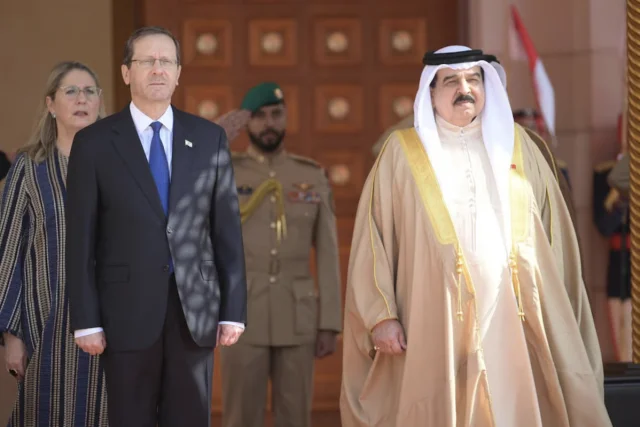
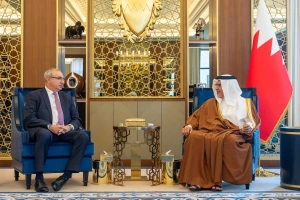
Israeli President Isaac Herzog and the King of Bahrain, Sheikh Hamad bin Isa Al Khalifa, spoke by phone on Sunday in the first publicly acknowledged conversation between the two leaders since the Hamas attacks on Oct. 7, 2023, offering a rare public sign of continued engagement under the Abraham Accords.
“I just held a phone call with His Majesty King Hamad bin Isa Al Khalifa of Bahrain,” Herzog said. According to Ynet News, the call was initiated by the Bahraini side.
Despite the continuing normalization between Israel and the core Abraham Accords partners since 2020 – Morocco, United Arab Emirates and Bahrain – along with the strengthening of military and economic ties, public displays of direct engagement have become significantly less frequent since the outbreak of the war in Gaza.
According to the report, it was Hamad who requested that the phone call be made public.
Israeli President Isaac Herzog on his call with the King of Bahrain:
— Ariel Oseran أريئل أوسيران (@ariel_oseran) July 26, 2026
The King of Bahrain, His Majesty King Hamad bin Isa Al Khalifa, is a bold and courageous leader, and together two nations, small nations in the Middle East, wish to pursue peace, pursue coexistence between Jew… https://t.co/JzCaUZRPgy pic.twitter.com/Ri13rQj9H7
“During the call, we discussed the friendship and relations between Israel and Bahrain, as well as the importance of the U.S.-led Abraham Accords in strengthening security, stability, and prosperity in the Middle East,” said Herzog.
In a likely reference to the recent exchanges of fire between the United States and Iran, which repeatedly attacked Bahraini territory, the president added, “We also spoke about recent developments in the region.”
Communication between Israel and several regional states has intensified in recent weeks, according to Kan News, as countries seek to strengthen security coordination amid concerns that further escalation could trigger a broader regional conflict.
An Israeli official told Kan, "During Operation Rising Lion, Israel was in contact with countries in the region, countries that understood the danger posed by the Iranian regime. The dialogue with those countries is continuing and growing stronger."
“Bahrain is an important country in the Middle East, and I congratulated the King on his bold leadership and vision for the region.”
The call between Herzog and Hamad was the second in two weeks, according to Ynet News. The timing of the call's public disclosure is notable because Bahrain has suffered several Iranian missile and drone strikes in recent weeks.
In the most recent attacks, on Friday, Iran's Revolutionary Guards (IRGC) reported that they targeted an observation tower at the headquarters of the U.S. Fifth Fleet in Bahrain. Iranian state media reported that the IRGC struck Amazon's data center as well.
Ynet reported that, although the issue was not discussed directly during the call between Herzog and King Hamad, Israeli officials believe Bahrain is interested in acquiring Israeli-made missile interceptors.
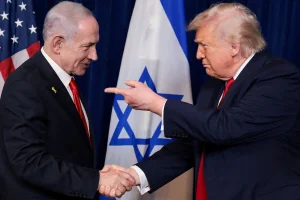
Speaking at a conference after the call, Herzog also said Hamad wished Prime Minister Benjamin Netanyahu “a successful trip to the U.S. and meeting with President Trump,” a strong sign that Bahrain continues to pursue a strong alliance with both Washington and Jerusalem, despite being targeted for hosting the U.S. fleet.
Over the weekend, The Wall Street Journal reported that Bahrain and Kuwait, which were targeted the most by recent Iranian strikes, secretly conducted airstrikes on military targets inside Iran for the first time.
The United Arab Emirates reportedly didn’t participate directly but provided intelligence and defensive air cover.
Bahraini citizens told Israel’s Channel 12 News last week that Israel should join the strikes against Iran as well. Bahraini author and activist Fatima Al Harbi told the channel, “There is great concern about the escalation, because every additional missile or attack could affect the lives of innocent people in Bahrain and the Gulf states... in a way that could harm Bahrain's economic situation."
“Of course, there is great anger among the Bahraini people toward Iran, and all Bahrainis stand united behind Bahrain’s wise leadership, whether by volunteering for public service in every field or through prayers against our enemies.”