
David Brody, June 19, 2026
Part Two of an exclusive interview: Vance addresses whether Tehran can be trusted and how the White House plans to verify Iran's compliance
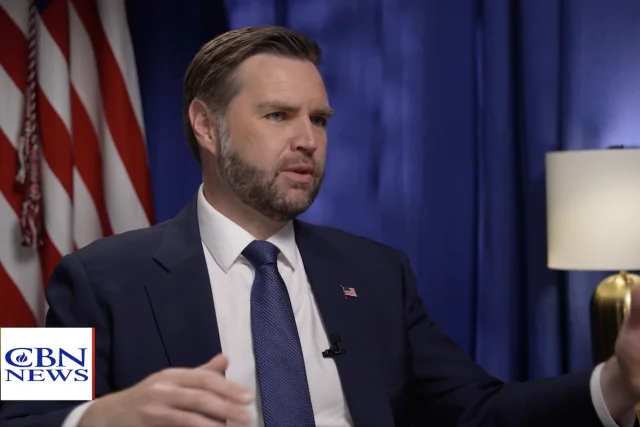
For decades, U.S. presidents from both parties have tried to negotiate with Tehran. Each time, supporters of Israel have raised the same concern: Are Western leaders treating the Iranian regime like a normal nation-state when, in reality, its leaders often operate through a very different ideological and theological framework?
Many Evangelical Christians and pro-Israel advocates argue that understanding Iran isn’t just about understanding geopolitics. It’s also about understanding the religious worldview that drives the regime.
That’s why I put the question directly to U.S. Vice President JD Vance during my exclusive interview with him this week.
In Part One of the interview, published on Thursday, he and I discussed why the Trump administration believes a new nuclear agreement with Iran could ultimately strengthen Israel's security. However, many supporters of Israel remain unconvinced.
The issue wasn’t simply whether Iran says it won’t build a nuclear weapon. The issue was whether the administration understands the deeper concerns many critics have about trusting anything the regime says.
“I want to ask about the theological part of this,” I told Vance. “So, for example, Iran says they’re not going to build a nuclear weapon. Sure. Right. That’s like a kind of a chronic thief saying, trust me again.”
I then raised concerns frequently discussed by some scholars, Evangelical leaders, and Middle East analysts.
“So it kind of goes to the theological issues within Islam, specifically the way the regime sees it. Taqiyya, which basically allows you to lie, in righteousness, if you will. There is Hudaybiyya, the Treaty of Hudaybiyya, which Muhammad signed in the sixth century, which basically is a way for them to retool and to rearm. And this is part of their mindset. How concerning is that to you?”
“Well, I certainly hope that they’re not lying,” he replied. “But it’s not concerning to me because I don’t really trust anybody.”
That response may offer the clearest window yet into how U.S. President Donald Trump approaches negotiations with Iran.
Rather than trusting Iran’s words, Vance says the White House intends to focus exclusively on Iran’s actions.
“And I think this is one of the things the president has told us to do in this negotiation,” Vance explained. “Don’t trust any words that are written on paper.”
For an administration trying to convince skeptical conservatives, Evangelical Christians, and supporters of Israel, that may be the central argument.
Trust isn’t required. Verification is.
According to Vance, every meaningful benefit Iran receives under the agreement is tied to what it actually does, not what it says. That remains to be seen, but that’s the public posture at this point.
He continued, “Which is why I think both the good things for America and also the good things for Iran fundamentally only happen through action,” he said. “And that’s what we have set this up to do.”
The vice president described the framework in straightforward terms.
“So if they do things, then they get things. If they don’t do anything, then they don’t get any of the benefits of the bargain.”
That sounds simple enough on paper. Yet critics of Iran would quickly point out that Tehran has spent decades mastering the art of saying one thing while doing another.
Vance acknowledged that reality.
“I am sure that there are people within their system who are not telling us exactly what’s on their mind,” he said. “That’s just the way that these things go.”
Yet he returned again to what appears to be the administration’s guiding principle.
“But that’s why the president has told us don’t reward good words, reward good conduct. If that happens, and if not, no skin off our back.”
The White House argument appears to be that America is not being asked to trust Iran. America is being asked to verify Iran.
Still, for many supporters of Israel, another major concern remains.
Even if Iran refrains from pursuing a nuclear weapon, what happens if it continues financing groups like Hezbollah, Hamas, and other terror proxies across the Middle East?
After all, Israel’s biggest concern is not just Iran’s nuclear ambitions, but it’s also the regime’s ability to fund and arm forces throughout Lebanon, Gaza, Iraq, Syria, and Yemen.
So I asked Vance directly about the benchmarks.
“What about the benchmarks to make sure that Iran is not funding some of these proxies?” I asked. “How do you measure that?”
Vance argued that the answer may be more straightforward than many people think.
“You know, it’s just something that you’re going to see,” he replied.
He then pointed to the Hezbollah terrorist organization in Lebanon as an example.
“One of the things that actually has made Hezbollah, for example, much weaker over the past couple of months, obviously, is the Israeli military action,” Vance said. “But a lot of it is the money that existed just is not flowing to them because the Iranian regime has been under such stress.”
Then came perhaps the administration’s strongest argument for why it believes it can monitor the regime's behavior moving forward.
“If we see the Iranians sending money to Hezbollah, it’s going to be obvious,” Vance said. For critics, that may sound overly optimistic.
For the administration, it reflects confidence in American intelligence capabilities. “It’s one of these things where we have very good intelligence, we have very good knowledge of what’s going on on the ground,” Vance explained.
That intelligence, he believes, will provide a clear picture of where Iranian money is ultimately going.
“So we feel quite confident that we’re going to be able to tell whether the Iranians, whether they’re funding terrorism or whether they’re funding power plants and infrastructure,” Vance said. “We’re going to know either way.”
Whether Israel’s supporters are reassured by that answer remains an open question.
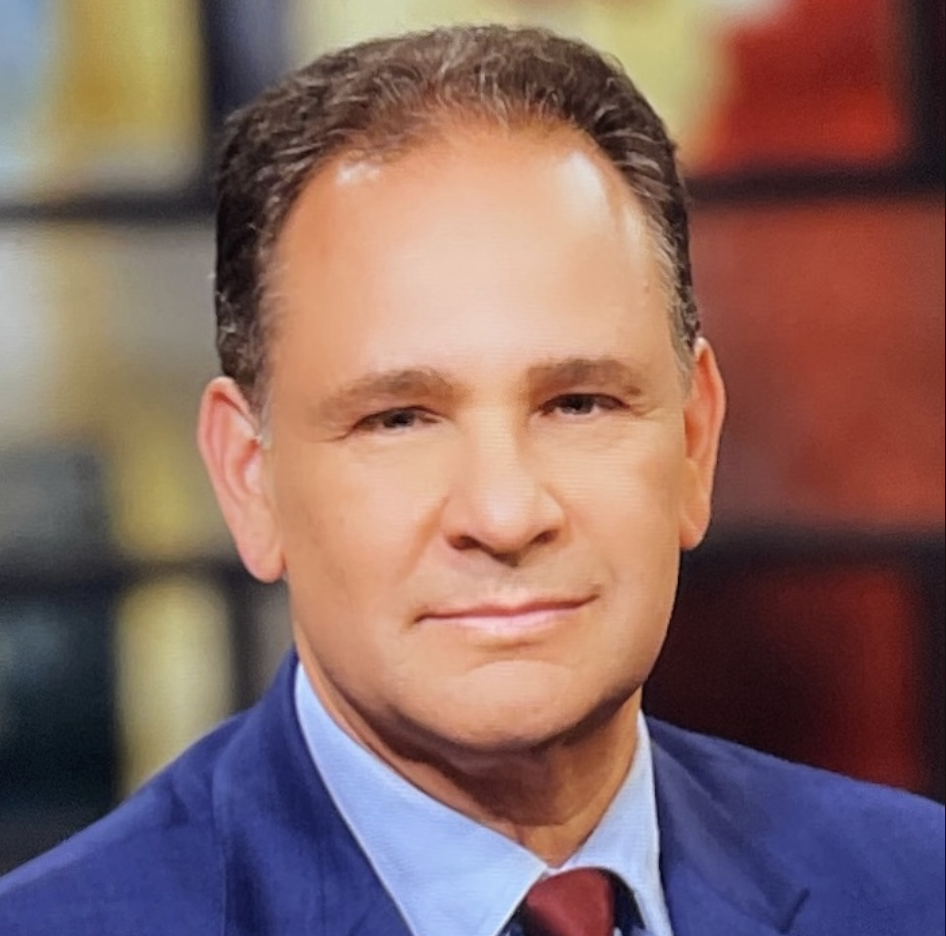
David Brody is a senior contributor for ALL ISRAEL NEWS. He is a 38-year Emmy Award veteran of the television industry and continues to serve as Chief Political Analyst for CBN News/The 700 Club, a role he has held for 23 years. David is the author of two books including, “The Faith of Donald Trump” and has been cited as one of the top 100 influential evangelicals in America by Newsweek Magazine. He’s also been listed as one of the country’s top 15 political power players in the media by Adweek Magazine.
