
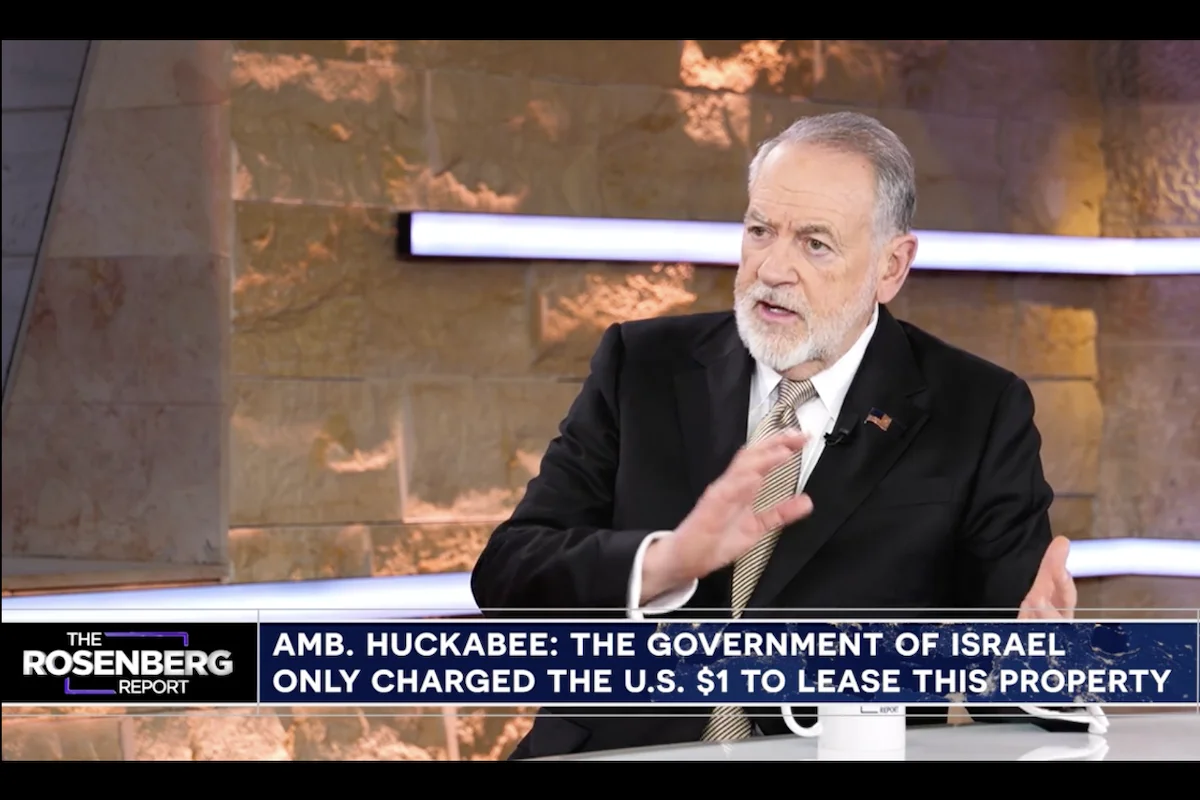
U.S. Ambassador to Israel Mike Huckabee says the deal he just signed with Israeli Foreign Minister Gideon Sa'ar for a new, purpose-built U.S. Embassy in Jerusalem may be "the best real estate deal I'll ever make." The price: one dollar.
That single dollar buys the United States a 99-year, perpetually renewable lease on the Allenby property – a large, flat piece of land in Jerusalem with historical roots tracing back to the British Mandate era and General Edmund Allenby's forces in the early 1900s.
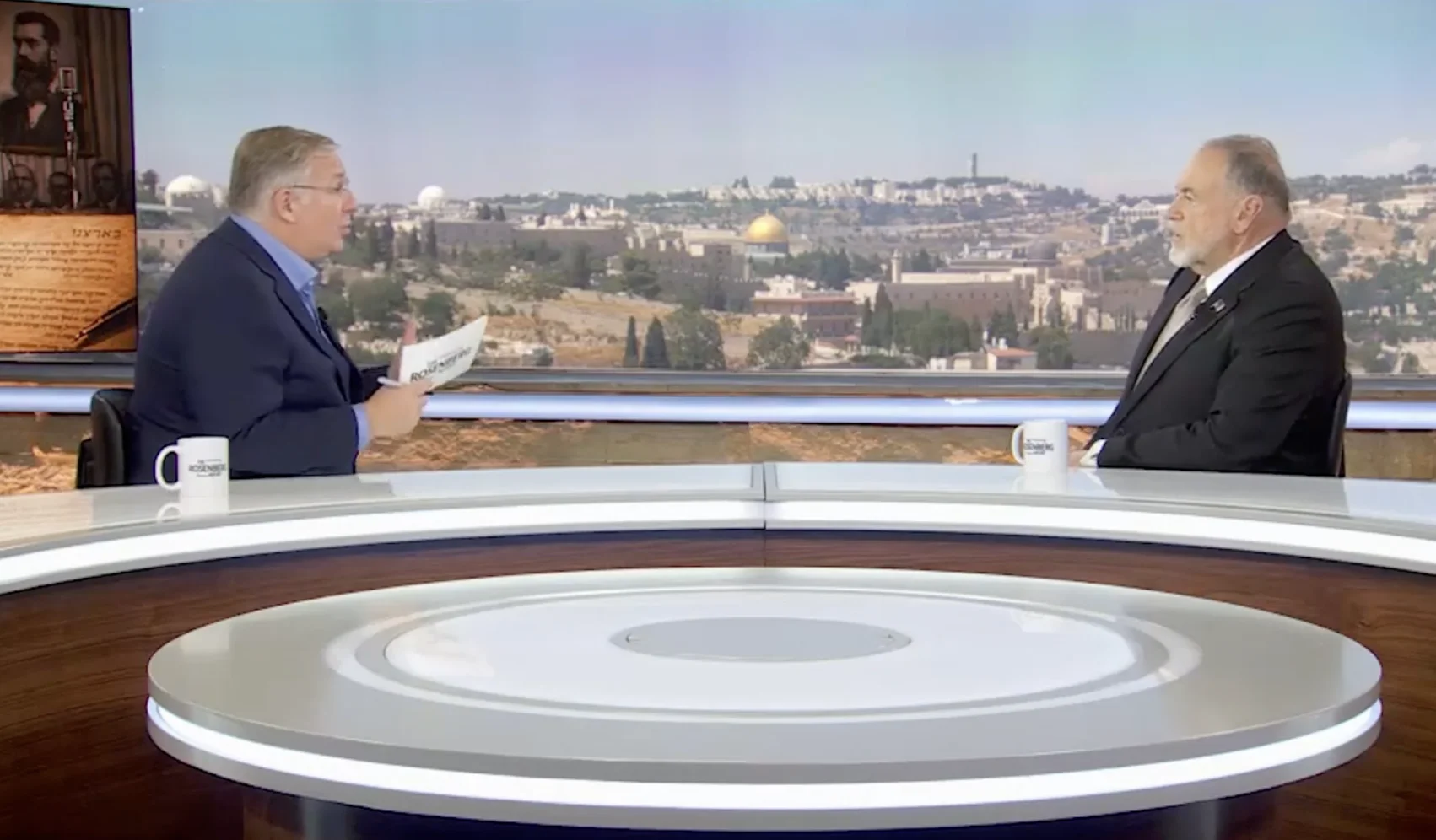
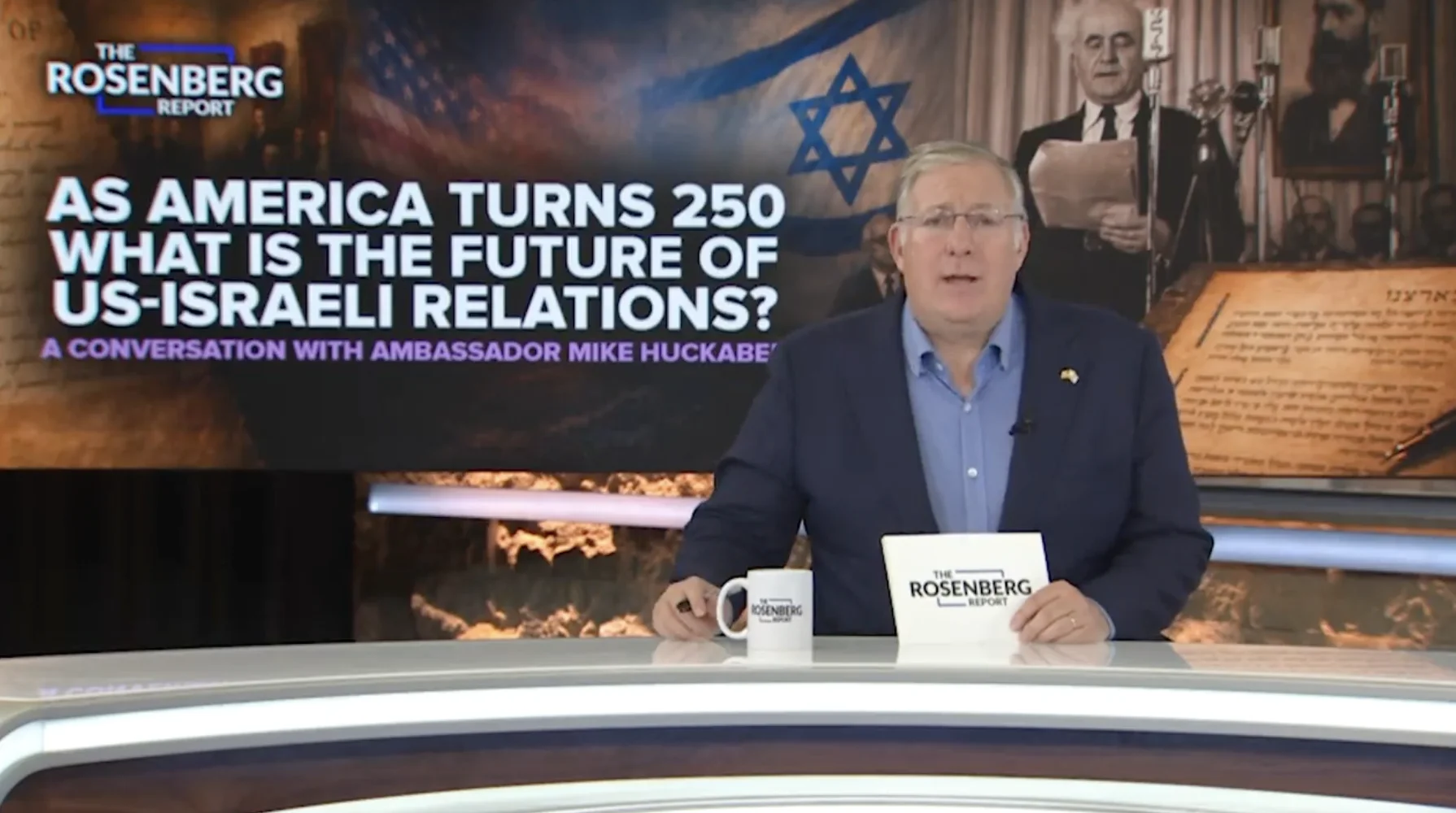
Speaking on THE ROSENBERG REPORT, Huckabee said he pulled a dollar bill out of his own pocket to hand to Sa'ar as a symbolic down payment, joking afterward that program host Joel Rosenberg would have "chipped in half" if needed.
The announcement marks a new chapter in a story that began in Donald Trump's first term, when he became the first U.S. president to follow through on a promise to move the American embassy to Jerusalem and recognize the city as Israel's capital.
Huckabee did not mince words about the track record of Trump's predecessors: "Every other president promised. They all welched."
What exists in Jerusalem today, he explained, is essentially a converted consulate – never designed to function as a full, permanent embassy.
American diplomatic operations are currently scattered across roughly 16 locations between Jerusalem and Tel Aviv, ranging from office buildings to warehouses. The new facility is intended to change that – consolidating operations into a single, purpose-built compound.
Huckabee estimates that the project could ultimately cost around one billion dollars and cautioned that construction would take years – possibly longer than his own tenure, or even his lifetime. "I've said I doubt I will live to see the finished product," he said, though he added he hopes to be proven wrong.
Getting to this point wasn't simple. Huckabee noted that transferring the property required extensive archaeological surveys and title searches, partly to pre-empt claims that the land was improperly obtained.
"That's all been put to rest," he said, while acknowledging the site will likely remain "the city of controversy" in some form.
The location itself was chosen, in part, for practical reasons – it's flat, easier to build on, and situated near a planned train station that will eventually make the embassy more accessible for staff and visitors alike.
Beyond the practical logistics, Huckabee framed the project as a statement of permanence. A temporary facility, he argued, sends a message that policy could shift with a future administration; a ground-up embassy, purpose-built for its role, does not.
He credited Israeli officials – including Prime Minister Benjamin Netanyahu, Foreign Minister Gideon Sa'ar and Jerusalem Mayor Moshe Leon – with pushing the deal through a notoriously complicated bureaucratic and archaeological system.
Economically, Huckabee suggested the project will benefit Jerusalem beyond the embassy's walls – bringing sustained construction activity and, eventually, a full American community built around the site, complete with families, schools, and daily life. It's a long-term institutional commitment that happens to have the smallest possible price tag.

No comments:
Post a Comment
Thanks for sharing. Blessings on your head from the Lord Jesus, Yeshua HaMashiach.
Steve Martin
Founder
Love For His People
Charlotte, NC USA