Friday, May 29, 2026

Welcome Shabbat. Welcome Lord!

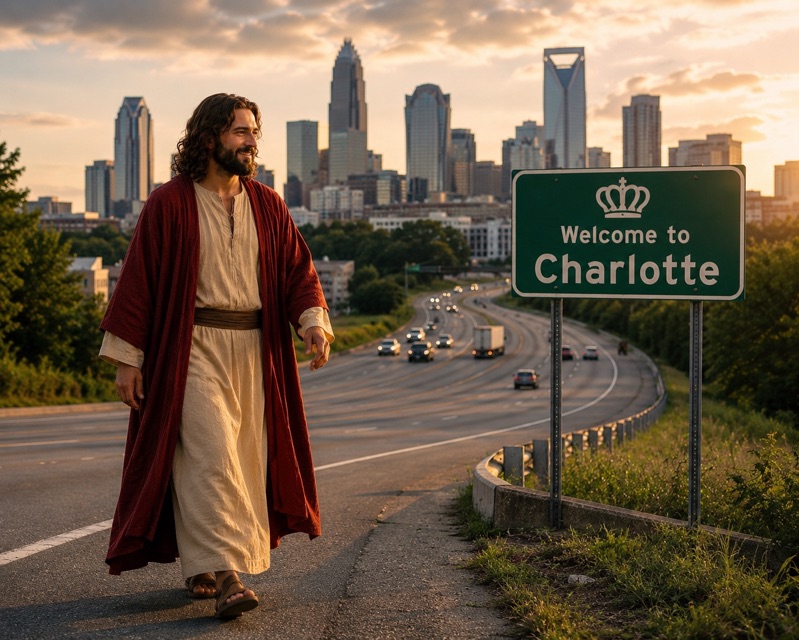
We welcome Shabbat. We most certainly welcome Jesus (Yeshua) coming to Charlotte, North Carolina.

Steve Martin, Love For His People
What Jethro Saw That Moses Could Not. Israel365 By: Shira Schechter

What Jethro Saw That Moses Could Not


At the end of December 2025, Israeli Prime Minister Benjamin Netanyahu sat down with a room full of Evangelical Christian leaders in Florida and said something remarkable. “You are representatives of the Christian Zionists who made Jewish Zionism possible,” he told them. “It’s hard for me to conceive the emergence of the Jewish state without the support of Christian Zionists.”

For some Jews, that kind of statement is uncomfortable. The idea that Israel — the Jewish state, built on Jewish longing and Jewish blood — needed anyone.


Moses asked the same question — and answered it — in this week’s Torah portion.

Behaalotcha opens at the peak of Israel’s spiritual history. The nation stands at Sinai, Torah in hand, organized in perfect formation, the miraculous cloud of God resting on the Tabernacle. When the cloud lifts, Israel travels. When it rests, Israel camps. They need no map, no compass, no guide. God Himself is leading them every step of the way.

Then Israel prepares to march toward the Land, and Moses does something unexpected. He turns to his father-in-law Hovav — a Midianite, a non-Jew — and pleads with him not to leave:

The phrase ve-hayita lanu le-einayim, which literally means “and you will be our eyes,” but translated here as “and can be our guide,” puzzled the classical commentators. Moses has the cloud. Moses speaks with God face to face. What could a Midianite possibly see that Moses cannot?

Rashi suggests Moses was not speaking about navigation at all. He was making a personal promise: Hovav would be ‘beloved to us like the pupil of our eye.’Hovav, a former pagan priest, an outsider by every measure, might naturally have worried about his place among Israel. Moses answered that worry before it was spoken: you will not merely be tolerated. You will be cherished.

Rabbi Samson Raphael Hirsch reads the verse more practically. The cloud showed Israel where to go. But Hovav knew the wilderness itself — its terrain, its resources, what could be found and used at each encampment. Divine guidance and human knowledge were not in competition. The Almighty directed their path; a Midianite helped them make the most of where they landed.

But the most penetrating interpretation belongs to the twelfth-century French commentator Rabbi Yosef Bekhor Shor. In his reading, Moses was not speaking about what Hovav could do for Israel. He was speaking about what Hovav’s presence would communicate to the world.

When the surrounding nations saw Hovav — a Midianite priest who had voluntarily left his homeland to walk with Israel — they would ask themselves an unavoidable question: why would he do that? And they would reach an unavoidable answer. As Bekhor Shor writes: “Those who see you with us will say — he did not abandon his land and his birthplace for nothing, unless he saw that God is with them.”

That recognition, once reached, changes everything. A nation that concludes God is with Israel thinks carefully before raising a sword against her.

But Bekhor Shor’s premise points even further than his conclusion. If the fearful response to recognizing God’s presence with Israel is to stand down, the wiseresponse is to step forward — to align with Israel rather than merely avoid her. The same moment of recognition that deters an enemy can inspire a friend. Both responses flow from the same realization: lo l’chinam — this man did not leave his home for nothing. Something real is happening here.

Moses understood this before Israel had marched a single step toward the Land. The nation had the Torah, the Ark, and the cloud. And Moses still looked at a Midianite and said: your presence alongside us changes what the nations see. What you represent — a respected outsider who looked at our story and chose to stay — is something we cannot provide for ourselves.

The answer is not that Israel is weak or incomplete. It is something more ambitious. Israel’s mission was never simply to survive, or even to thrive. It was to be, in the words of Isaiah, a light unto the nations — and a light that shines in an empty room illuminates nothing. The nations are not a concession to Israel’s limitations. They are the audience, the partners, and ultimately the purpose. A Jewish state that exists only for Jews has fulfilled only half its calling. When Hovav walks alongside Israel, he is not filling a gap. He is completing a picture. Moses understood that an Israel marching alone toward its land would be a diminished Israel — not because it lacked military strength or divine favor, but because it had not yet become what it was always meant to be: a nation whose story the world could see, recognize, and be changed by.

This is the vision at the heart of Universal Zionism. Not the conversion of the nations — Hovav remained a Midianite, and Moses asked nothing else of him — but their recognition. When the world sees that righteous gentiles, people with no obligation to do so, freely choose to stand with the Jewish people, it sends a signal more powerful than any diplomatic statement: God is with them. And nations that are paying attention draw their own conclusions from that signal.

Moses closed his plea to Hovav with two things: a promise and a guarantee. The promise: “Whatever good God does for us, we will do for you” (Numbers 10:32). The guarantee came earlier, in Rashi’s reading of the very same verse — that Hovav would be “beloved to us like the pupil of our eye.” Not useful. Not tolerated. Beloved.

That is Israel’s complete offer to its allies across the generations. Not absorption. Not transformation. A shared journey, with distinct roles — and a guarantee that those who recognize what God is doing with Israel, and choose to walk alongside her, will be cherished by the Jewish people in return.

Netanyahu’s words in Florida were not diplomatic courtesy. They were the echo of something ancient. Today, tens of millions of Christians around the world have looked at Israel’s story — the return from exile, the rebuilt cities, the nation that survived what should have destroyed it — and reached the same conclusion Hovav’s presence once announced to the wilderness nations: they didn’t rebuild that land for nothing. God is with them. And to those who recognize that, and choose to walk alongside Israel rather than look away, Moses’s promise still stands. You will not merely be useful to us. You will be beloved to us — like the pupil of our eye.

Shira Schechter

Shira Schechter is the content editor for TheIsraelBible.com and Israel365 Publications. She earned master’s degrees in both Jewish Education and Bible from Yeshiva University. She taught the Hebrew Bible at a high school in New Jersey for eight years before making Aliyah with her family in 2013. Shira joined the Israel365 staff shortly after moving to Israel and contributed significantly to the development and publication of The Israel Bible.

SUBSCRIBE

Sign up to receive daily inspiration to your email 

Lebanon faces a choice: will it choose good or evil? All Israel News

Opinion Blog / Guest Columnist

ALL ISRAEL NEWS is committed to fair and balanced coverage and analysis, and honored to publish a wide-range of opinions. That said, views expressed by guest columnists may not necessarily reflect the views of our staff.
OPINION

Lebanon faces a choice: will it choose good or evil?

 
  • fr
  • de
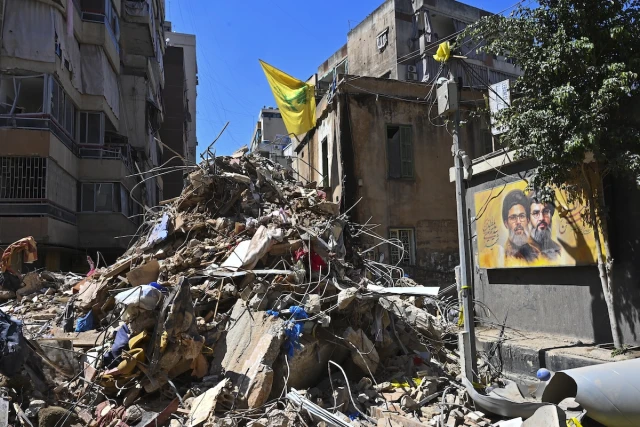
Rubble of a collapsed building in Beirut's southern suburb of Haret Hreik, Lebanon, on May 7, 2026. Israel conducted military operations in Beirut's southern suburbs on May 6, marking the first such event in nearly a month. (Photo by Fadel Itani/NurPhoto via Reuters)

It was interesting to read in ALL ISRAEL NEWS that the majority of Lebanon favors disarmingHezbollah and supports peace talks with Israel. It was also encouraging to hear that the Christian communities topped that poll.

So it is important for the Lebanese government to listen to its people. But will it? Hezbollah holds 13 seats in the Lebanese parliament, so will they really just go away?

Lebanon needs to act now before it is too late. Hezbollah has become a state within a state, dragging Lebanon into a war that the people don’t want. It now has seats in parliament, yet the government is supposed to do the will of the people.

Jordan faced the same decision many years ago. Yasser Arafat set himself up in Jordan, creating a state within a state. But Jordan dealt with him, and he was expelled from the country in 1971. Since then, Jordan has had a good relationship with Israel. I wonder what would have happened if Jordan hadn’t expelled Arafat. How fractured would that relationship be today if Jordan hadn’t done what it did?

Today, if Lebanon wants peace, it needs to do the same thing. It’s no good leaving the rotten apple in the barrel—it needs to be taken out, or it will damage the others.

If Lebanon is not careful, it may face a coup and lose its country to a terrorist organization. The government must listen to its people. Hezbollah is already dragging the country into war with rockets and drones fired into Israel. But if Lebanon doesn’t deal with the rot, Israel will—and that could be painful.

Israel cannot allow Hezbollah to control the south of the country. It cannot allow Hezbollah to set up rocket launchers and dig tunnels along the border. Israel does not want another October 7-style attack on its northern border, so it must act to protect its country and its people. We thank every soldier who is working to protect the northern border of Israel. Soldiers have given their lives to defend that border, when the UN should be doing its job but isn’t.

Getting rid of Hezbollah will contribute to peace in the Middle East. Pro-Palestinian marches around the world think that getting rid of Israel is the solution, but in reality, destroying Hamas, Hezbollah, and Iran’s terror capabilities is the answer and the only solution to the current situation. Freedom will come to the Palestinians in Gaza, freedom will come to the Lebanese in the north, and freedom will come to the Iranian people once terror is destroyed.

You can’t appease these people—you have to root them out. Israel appeased the world by removing all the Jews from Gaza. The Palestinians were given their own piece of land to develop and build something amazing, yet we all know what they did with it. They built a terror network that committed the biggest massacre in Israel’s history. We need to learn a lesson from that.

Today, the Lebanese government has a choice. Which will you choose?

It reminds me of the Bible verse in Joshua 24:15:
“And if it seems evil to you to serve the Lord, choose for yourselves this day whom you will serve… But as for me and my house, we will serve the Lord.”

Will you choose to follow the god of terror and destruction? If you do, you will reap the consequences. Or will you follow the God of peace?

Following the God of peace will result in blessings with trade deals, security, and peace “I will bless those who bless you.”

Do the right thing, Lebanon. Listen to your people and choose peace.

Paul is a Christian journalist