IDF ultra-Orthodox rabbi Yehuda Weitzman bridges communities amid draft debate


The issue of exemptions for ultra-Orthodox (Haredi) Jewish men from mandatory IDF service has remained one of the most contentious subjects in Israeli politics for decades, straining successive Knesset coalitions and drawing renewed attention during the more than two years of the war, which has placed significant demands on the military’s manpower.
Debates over whether Haredi young men should serve alongside other sectors of Israeli society have extended beyond the political arena, fueling public protests and deepening social divisions.
Against this backdrop, IDF Captain Yehuda Weitzman (34) has emerged as an unexpected figure seeking to bridge gaps between different communities in Israeli society.
Weitzman is the father of three children and a member of the Ger Hassidic sect, which has traditionally been among the most staunch opponents of military service for eligible religious men. But he is serving as a field rabbi in the Hasmonean Brigade, a special unit designated for ultra-Orthodox recruits that has already attracted interest in the community.
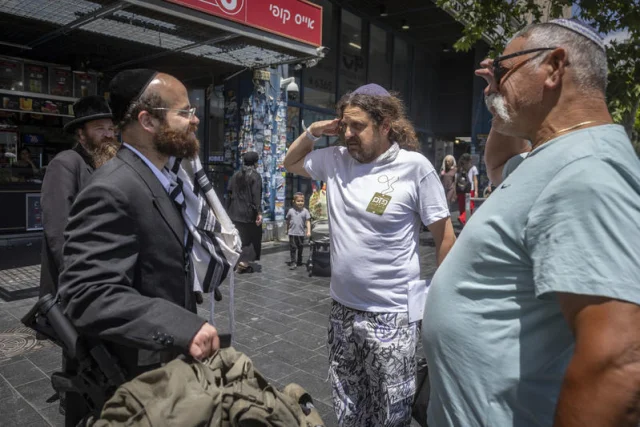
A photo of Weitzman leaving his home in an ultra-Orthodox neighborhood in Jerusalem to join his unit, a combat vest draped over his wheeled suitcase and a Torah scroll in his arms, recently circulated on social media and drew attention and praise.
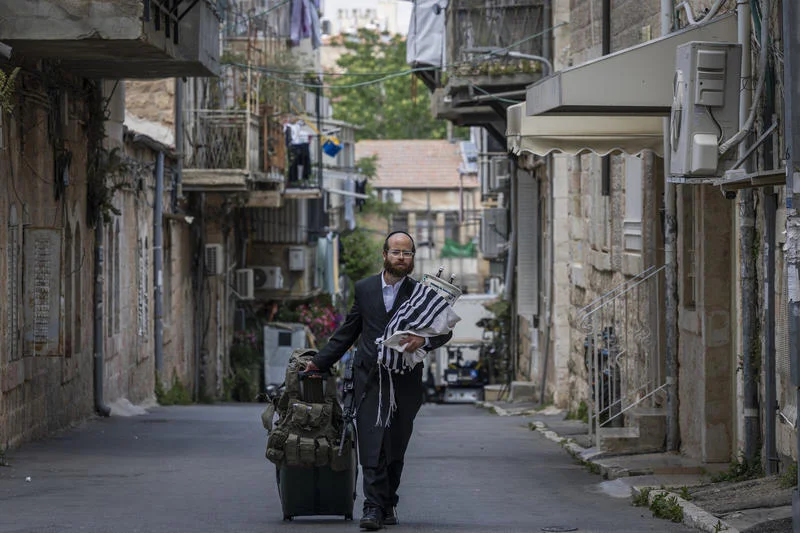
Following the post’s circulation, Yedioth Ahronoth invited him for an interview about his experience. The resulting interview offers a closer look at his personal story.
“I grew up in Jerusalem and studied in yeshivas and in a Kollel,” he told the newspaper, referring to his full-time, intensive studies as a married scholar. “In 2018, I enlisted for full military service. I felt I needed to be part of what I call ‘the Temple of our time.’ The Temple once brought all parts of the Jewish people together, and today the army does that. I wanted to be part of it, to reach people’s hearts.”
Weitzman also spoke about his time in the IDF as a regular soldier, noting that he volunteered for officer training and served in a combat unit. He described his service in the military reserves and, like many Israelis, reflected on where he was and what he was doing on Oct. 7, 2023.
"I reached the Gaza border communities that same day,” he said. “Afterward, I was assigned to the Shura military base to help care for the fallen. Those were emotionally overwhelming days. I saw what happens when a people fails to stand guard.”
He was mobilized and served for several months as a battalion rabbi in units that were deployed to Gaza and Lebanon. These were months of intense activity, but Weitzman said he felt he should be doing more.
“Despite the meaningful role I had during the war, I felt I was more of a 'cheerleader' than a player,” he said. “When the Hasmonean Brigade was established, they allowed reservist combat soldiers to enlist in it. I took off my ranks and did combat basic training from the beginning. I’m a captain, and the officer who was training me was a second lieutenant. But it was worth everything. Now I’m no longer cheering from the sidelines. I’m a fighter, a player on the field.”
In his spare time, Weitzman worked to raise money to buy supplemental equipment for soldiers in his unit. Many IDF soldiers did this during the last two and a half years, but he also solicited donations from Orthodox communities, including some that are not traditionally supportive of the Israeli military or the State of Israel.
“Since October 7, I’ve seen the mobilization of the entire people of Israel,” he said. “I brought a donation to the IDF even from anti-Zionist Satmar Hasidim in the United States, who donated operational equipment worth tens of thousands of shekels. I was also involved in organizing more than 30 barbecues for soldiers, all from Haredi communities. This beautiful connection is deeply moving.”
“We have a group of Ger Hasidim, and whenever we’re stuck and need a Torah scroll, equipment or dinner for soldiers, I send a message there and people immediately step up to volunteer and help. The Hasidic community is not against the soldiers. The issue is more complicated because of the yeshiva students.”
Wanting to do more, Weitzman has also taken on the role of bringing Torah scrolls to units deployed in active combat zones.
“I’ve brought in 19 Torah scrolls, and every time I see how much they bring people together,” he said. “You see traditional soldiers, secular soldiers, religious soldiers, even an officer who is active in the civic-social movement, Brothers in Arms, in civilian life, and everyone is moved by the scroll. To me, that is deeply moving.”

The All Israel News Staff is a team of journalists in Israel.