Netanyahu is in Washington to Talk Iran Strategy with Trump
WAR UPDATE 113
From Mourning to Joy – While Our Leaders Sit in Washington
Tonight, Tuesday, July 28, as the sun sets in Israel, we enter Tu B’Av - the fifteenth of the Hebrew month of Av. Six days after the deepest national mourning of the destruction of the Temples in Jerusalem on Tisha B’Av, the Jewish calendar deliberately turns toward joy.
TU B'AV - The 15th of Av
Most people today know Tu B’Av as Israel’s “day of love,” a time for weddings and proposals. But the Talmud (Ta’anit 30b–31a) records historical reasons this day became one of the happiest on our calendar. Each one tells a story of brokenness healed and barriers removed.
1. The generation that left Egypt finally stopped dying in the desert. For nearly forty years, every Tisha B’Av, thousands of men of military age would dig their own graves and not wake up the next morning. On the fifteenth of Av in the fortieth year, the decree ended. No more graves were needed.
2. The tribes of Israel were permitted to intermarry freely again. After the conquest of the Land, a temporary restriction had limited marriage between tribes so that inherited land would not pass from one tribe to another. On Tu B’Av that restriction was lifted. Unity was restored.
3. The tribe of Benjamin was allowed back into the congregation of Israel. After the civil war that followed the terrible incident of the concubine in Gibeah, the other tribes had sworn not to give their daughters to Benjamin. On this day the ban was lifted and the tribe was reintegrated.
4. The roadblocks preventing Jews from reaching Jerusalem for the festivals were removed. In the last years of the Northern Kingdom, King Hoshea removed the armed guards that earlier kings had stationed to stop the people from going up to the Temple.
5. The dead of Beitar were finally permitted burial. After the Bar Kochba revolt, the Roman emperor Hadrian had forbidden the burial of the tens of thousands of Jews massacred at Beitar. Their bodies lay exposed for years. On Tu B’Av the decree was rescinded, and they received proper Jewish burial. The blessing “HaTov veHaMeitiv” (“Who is good and does good”) was instituted in part because of this mercy.
Every one of these reasons is about the same theme: after catastrophe, after division, after desecration, the Jewish people are allowed to reconnect – to each other, to the Land, and to life itself.
We are living that pattern again
Almost three years after the pogrom of October 7, the last living hostages came home in October 2025. The body of the final hostage, Ran Gvili, was recovered this past January. The mourning is not over, it never fully is, yet the calendar insists we must also choose joy and rebuilding.
At this very moment, Prime Minister Netanyahu is in Washington for his first face-to-face meeting with President Trump since the joint campaign against Iran earlier this year. Iran remains the top item on the agenda. There is a fragile lull in the fighting. Israel has approved the entry of a limited multinational force into Gaza under the American framework. Pressure continues regarding Lebanon and Syria.
We use every tool Hashem places in our hands. We appreciate the kindness of nations when it aligns with our survival. But we also remember the words of King David:
“Do not put your trust in princes, in a human being who has no salvation.” (Psalm 146:3)
And we hear the voice of Moses in this week’s parsha, Eikev:
“And it shall be, because you will listen to these laws and keep and perform them, that the Lord your God will keep for you the covenant and the kindness that He swore to your fathers.” (Deuteronomy 7:12)
The word “eikev” can also mean “heel” and refers to the small, easily trampled mitzvot. The message is clear: the great redemptions come when we are careful with the details of faithfulness, not only with the dramatic political moves.
Living with Joy
In Israel, the country is on summer vacation. Children are playing. Families are swimming in the Sea of Galilee. Young people are hiking in the mountains. And couples are getting engaged to be married. We still choose life.
Tu B’Av teaches us that after the destruction of Beitar, after the graves in the desert, after the roadblocks and the bans, the Jewish people dance again in the vineyards.
May the same God who removed the barriers to Jerusalem, also remove every remaining barrier to the full security and redemption of His people in our days.
And may those sitting in Washington remember that the ultimate Guardian of Israel neither slumbers nor sleeps.
Last week on our daily walk in the neighborhood, we spotted this Sabra cactus across the street. It was part of a living fence defining the property line of the neighbor's house.
It was loaded with what we call Sabra fruit here in Israel. You probably call them "Prickly Pears."
These were not yet ripe for picking. However, a few days later they were already changing color under Jerusalem's summer sunlight.
Did you know that the Sabra cactus is not native to Israel?
This week's photo is from Dave Gordon of Toronto, Canada.
Dave is an old friend from Toronto. He's a journalist and media professional whose work has appeared in the National Post, BBC, Baltimore Sun, New York Times, Washington Times, UK Guardian and more than one hundred other publications. He's an expert in many areas... including olive oil.
I'm using the most delicious olive oil - from Israel! It came from the groves of Galilee Green. Lovingly grown and carefully pressed by local farmers. You won't think of olive oil the same again. The flavours are just incredible. (Not paid to say this -- I really like this product a lot)
I'm so glad the dent in your tin didn't affect your enjoying your GGOO, Dave! (There are a lot of postal workers in Canada who may not love the Israel symbols we print on our packages)
Blessings to you and your family - stay safe in Toronto.
Because of the strengthening of the Israeli Shekel against the US Dollar (20 percent since January!) we are trying to make up for our effective loss in revenue by increasing the number of people using our products. Please encourage at least one other friend or relative who loves Israel to give us a try!
P.S. You can forward this newsletter to a friend to introduce them to us.
GALILEE GREEN OLIVE OIL
One of the greatest gifts you can give someone is the ability to support themselves.
Support out small business in Israel and bring the blessings of Israel into your own home!
Here's your direct link to order a Two Pack today!
RAW NATURAL HONEY
Bring the sweetness of the Land of Israel into your own home!
Bible believers know that studying the Word of God is good for you. What might come as a surprise is that one particular food discussed in the Bible contains a wide array of hidden health benefits. This is becoming increasingly clear as scientists discover more and more positive health benefits from consuming extra-virgin olive oil.
Sorting Olives in the Galilee
"Olive oil is the only vegetable oil that can be taken as it is, just by cold pressing the pure oil out of the olive without heavy processing, heat or chemicals," said Rabbi Shmuel Veffer to PNW. "This is one of the many miracles we glean from the olive, one of Israel's seven holy species discussed in the Bible."
Rabbi Veffer and Nili Abrahams are co-founders of Galilee Green, an Israeli company that produces premium boutique olive oil for worldwide distribution. Galilee Green is well aware of the unique health benefits of extra-virgin olive oil and has even included a "Wellness" section highlighting this important information on the company website.
"The Bible is replete with references to the importance of olive oil," continued Rabbi Veffer. "Also, in ancient Egypt, olive oil was so valuable that it was used in the payment of wages."
"A land of wheat, barley, grapevines, fig trees, and pomegranates, a land of olive oil and honey"
(Deuteronomy 8:8).
To date, extra virgin olive oil has been scientifically found to aid in the prevention of obesity, heart disease, diabetes, various cancers, osteoporosis, Alzheimer's disease and more. Studies of the benefits of olive oil have come out of some of the most respected scientific research in the world.
Modern-day interest in the health benefits of olive oil increased when it was discovered in the 1940s and 1950s that those who follow the Mediterranean diet decrease their risk of early death from cardiovascular disease by 9 percent. A 2014 follow-up study credited an elevated consumption of olive oil with reducing the risk of cardiovascular events and stroke.
The Mediterranean diet includes a proportionally high consumption of extra-virgin olive oil, legumes, unrefined cereals, fruits, vegetables, fish, moderate amounts of dairy consisting mostly of cheese and yogurt, moderate consumption of wine and small amounts of meat.
"It may be counterintuitive to think that adding olive oil to your diet is good for your heart, but that is what science has found," said Rabbi Veffer. "It is proven to be more effective for cardiovascular health than a low-fat diet and also helps lower cholesterol and blood pressure."
Olive oil, considered a "good fat", is also linked to a decreased risk of osteoporosis. A study from the Ain Shams University in Egypt found that the monounsaturated fat in olive oil helps the body break down calcium so it can be properly absorbed into bones.
In addition, some studies have found a decreased risk of Type 2 diabetes in those who consume extra-virgin olive oil. Others credit olive oil for protecting the body against breast cancer.
And consuming extra-virgin olive oil is also linked with a lowered risk of Alzheimer's disease and slower cognitive decline as well as a lessening of other neurological disorders such as Parkinson's disease, estimated at a rate as high as 13 percent.
Consuming olive oil is also good for mental health. According to Spanish researchers from the University of Navarra, a diet rich in olive oil can help prevent mental illness, and people are 30 percent less likely to suffer from depression when following the Mediterranean diet.
Readers are Leaders! Subscribe now and get 3 magazines for the price of 1. Get Charisma, Ministry Today and SpiritLed Woman all for $24. YES - Sign me up!
3 Reasons Why you should read Life in the Spirit. 1) Get to know the Holy Spirit. 2) Learn to enter God's presence 3) Hear God's voice clearly! Click here to draw closer to God!
The Lord called thy name a leafy olive tree, fair with goodly fruit; with the noise of a great tumult He hath kindled fire upon it, and the branches of it are broken
The first time the olive appears in the Bible is when Noah checks to see if the flood waters have receded. When the dove returns with an olive branch in its mouth, Noah knows that the water has receded sufficiently and life has begun anew (Genesis 8:11, 21). Pure olive oil was also used for the lighting of the golden lamp in the Temple, as well as to anoint priests and kings as part of their initiation. One lesson we can take from the olive is that just like an olive only yields oil when pressed, so too, when we are pressed between the millstones of life, our best selves emerge. It is often only when forced that we rise to the occasion to meet life’s challenges. We now find ourselves in the days preceeding Tisha B'Av, the day when we commemorate the destruction of our holy Temple in Jerusalem. History has taught us that Jeremiah's words ring true, and in the face of hardship, the Jewish people rise to the challenge.
The inspiring words of greeting to over two hundred new Israeli citizens, who chose to move to Israel during last summer's war, are a true testament to the Jewish nation's ability to overcome any challenge.
Four Americans are being held in Iran, at least three on what are considered to be trumped-up charges, and their families would like to know why US President Barack Obama has not done anything to get them out?
We are now in the saddest period in the Jewish calendar, when we remember the destruction of the Holy Temples in Jerusalem. Bring a piece of Jerusalem into your home with this beautiful ritual washing cup featuring the Jerusalem skyline.
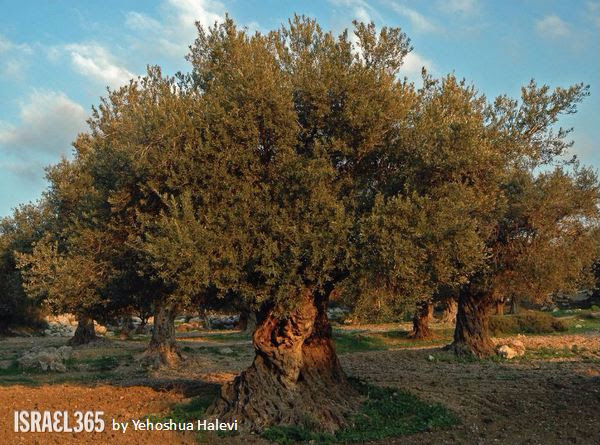
A sprawling olive tree by Yehoshua Halevi. The symbol of the olive tree was woven onto the flag of one of the tribes of Israel. Do you know which one, and its significance? Send me your answer or post it on Facebook.
It’s great to hear from you and make new friends from all over the world. Please send mean email and let me know how you are enjoying Jerusalem365 (don’t forget to say where you are from!).
Hello, good morning! Everything I have to say is: I love Israel and its people, from the bottom of my heart and pray, for the peace in Jerusalem every days and nights. A nice day for everybody there and a big hug! - Mauro Nunes Vieira
Barley looks similar to wheat but is smaller and surrounded by long ‘hair-like’ strands, from which it received its name ‘Se’ora’ which is very similar to the Hebrew word for hair, ‘Se-ar’. In biblical times, the barley harvest would be brought to the Temple in Jerusalem in a joyous ceremony that showed the importance of dedicating a portion of our crops to our Creator before we eat from them ourselves. Enjoy the incredible benefits of the biblical Seven Species with Shivat Natural Cosmetics with extracts of the Seven Species to bring you closer to the Holy Land.
Redemption of a first-born male donkey is a ritual spoken about in the Bible no less than three times. Over 1,000 people showed up in an Israeli city last week to experience this rare Biblical commandment.
This line of seven soaps called “Shivat”, means “The Seven” in Hebrew. Every one of the seven species contains healthful nutrients that benefit the body and promote wellness. Bring the blessed species into your home with these fantastic soaps.
I live in Wichita, Kansas and the State of Israel will always be in my heart along with steadfast prayers. God Bless You all. -Elmer Smith
Hello, My name is Ruth from Ontario, Canada and I love Israel and the Jewish nation. I pray often for the peace of Jerusalem. I have visited Israel twice and have never been the same since. Watching the video of Jerusalem brought back many wonderful memories. May God continue to bless and keep your land in his care. Shalom!


 2. The tribes of Israel were permitted to intermarry freely again. After the conquest of the Land, a temporary restriction had limited marriage between tribes so that inherited land would not pass from one tribe to another. On Tu B’Av that restriction was lifted. Unity was restored.